The visible surface is only the beginning
A rail, beam or vaulting table receives the athlete’s action. The structure must then transfer that action through every connection to its intended support.
Consider a high bar during a swing. The rail bends, the uprights respond, the tensioning system restrains movement, and the anchors transfer forces into a supporting structure. Those elements interact. Changing one part can alter the response of the whole assembly, even when the replacement appears stronger or more substantial.
This dossier explains that relationship. It does not provide design loads, anchor selections or permission to alter equipment. Those decisions require the manufacturer’s information and suitably qualified professionals.
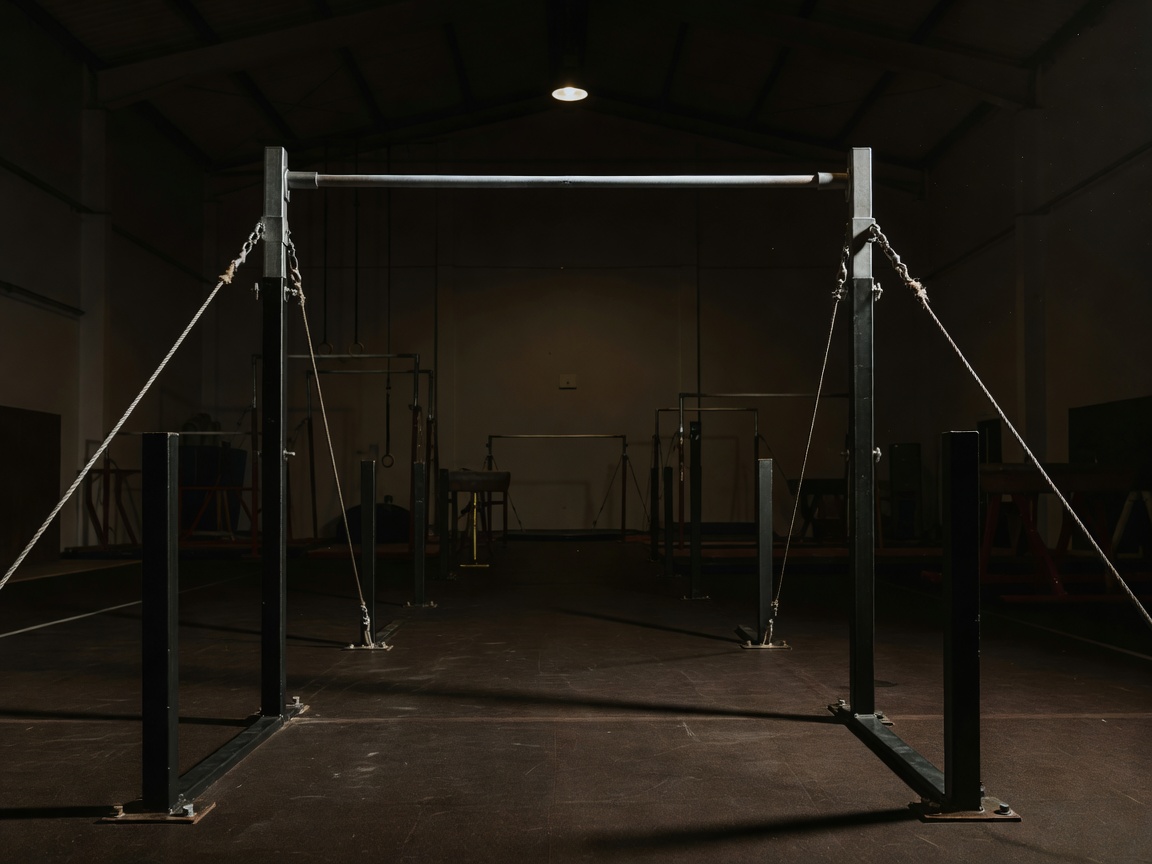
Design file / 01A
Trace the complete load path
A load path is the connected route through which forces reach the supporting environment. On a balance beam, that route includes the contact surface, beam body, support assemblies, height-adjustment components, feet and floor interface. On suspended rings, it extends through straps, suspension fittings and the approved supporting structure.
The route should remain coherent during the intended activity, not simply when the apparatus is standing empty. An athlete may apply changing vertical and horizontal actions, and the timing of those actions matters. Repeated use also makes fatigue behaviour relevant: a joint can experience many cycles without ever encountering a single dramatic overload.
For a facility manager, the useful question is not “How much weight can it hold?” in isolation. Ask which activities, users, configurations and installation conditions the equipment was designed to accommodate. A simple static weight statement cannot describe every dynamic gymnastics application.
Design file / 01B
Separate flexibility from looseness
Some apparatus is intentionally compliant. A rail may deform and recover in a controlled way, while a sprung floor combines multiple layers to produce a particular response. That behaviour is a design characteristic, not evidence that every moving component is acceptable.
Unintended play at a connection is different. Wear in an adjustment assembly, a slipping restraint or movement at an anchor can change geometry and introduce impacts within the mechanism. A coach’s familiarity with the apparatus is valuable, but familiarity cannot establish the structural significance of a new noise or movement.
Likewise, making a component stiffer is not automatically an improvement. An unapproved substitution can redirect forces into adjoining parts or change the athlete’s interaction with the apparatus. Preserve the specified assembly and escalate unexplained changes rather than improvising a remedy.
Design file / 01C
Connections define system behaviour
Bolts, welds, pins, clamps, cables and bonded interfaces are not secondary details. They establish how components remain aligned and how forces cross between them. Their geometry, materials, manufacturing process and assembly conditions belong to the design.
An adjustment pin must engage as intended, and a locking arrangement must be used according to its instructions. A part that fits through a hole is not necessarily a suitable replacement. Differences in material, tolerances, retention features or surface treatment may not be visible during an informal comparison.
Designers also consider foreseeable interaction: access to adjustment points, potential trapping locations, exposed edges and the transition between apparatus and landing area. Padding can address particular contact hazards, but it cannot restore an uncertain structural connection or make an unsuitable installation acceptable.
Design file / 01D
The building is part of the boundary
Anchored and suspended apparatus depends on more than the supplied product. The substrate, supporting structure, available clearances and installation details affect the finished system. A floor finish does not reveal the capacity or condition of the structure beneath it.
A new installation therefore needs coordinated information. The equipment supplier identifies the required interface; a competent building professional evaluates the relevant structure where necessary; and the installer follows the agreed specification. The handover should make the final arrangement and any operating limitations understandable to the facility.
Relocation deserves the same discipline. Moving equipment to another bay, changing a ceiling attachment or combining components from different models may change the assumptions behind the original arrangement. Treat those changes as technical questions before the apparatus is returned to athletes.
From design intent to purchasing questions
A useful specification describes intended use before naming a product. Record the apparatus category, training or competition context, expected adjustments, available space, installation interfaces and maintenance arrangements. Ask for the manufacturer’s instructions, identification method and relevant evidence for the exact configuration being purchased. This gives production and verification a defined target rather than a vague expectation of “professional quality.”